Free delirium education for health and care staff
Start with Delirium in 30
The essentials of delirium care in 30 minutes.
A shared introduction for healthcare professionals, care staff and students caring for adults. Learn to recognise delirium, act promptly and support the person. Then build on the foundation with further modules.
Free to use. No registration required. Works on a phone.
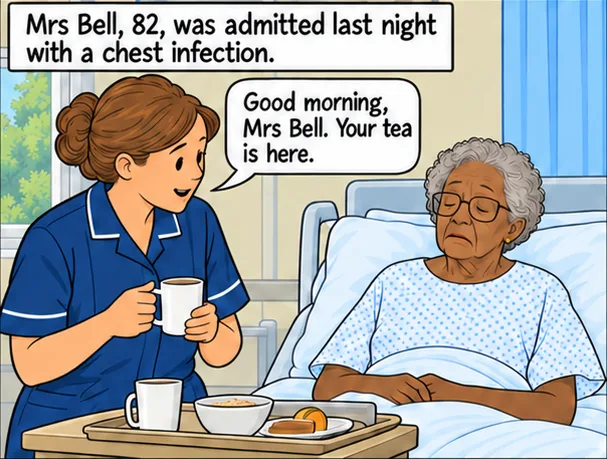
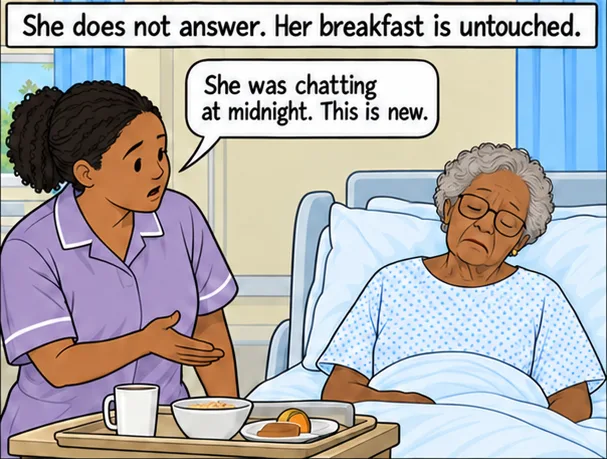
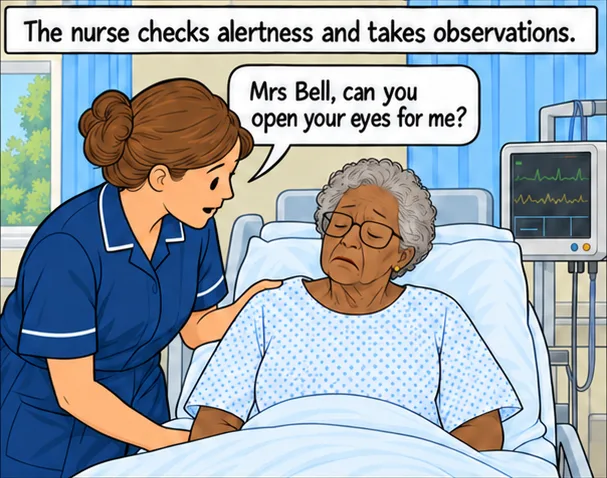
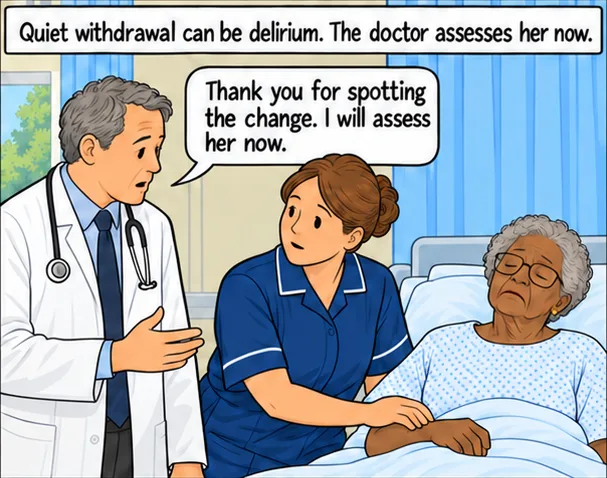
Not joining the conversation
Case 1, a composite case: hypoactive delirium after admission
Your learning route
Begin with Delirium in 30, then choose further topics for your role and setting. Most teaching concerns general adult care; the safety module also includes ICU examples and specialist guidance.
Optional preparationNew to healthcare? Eight minutes of preparation →
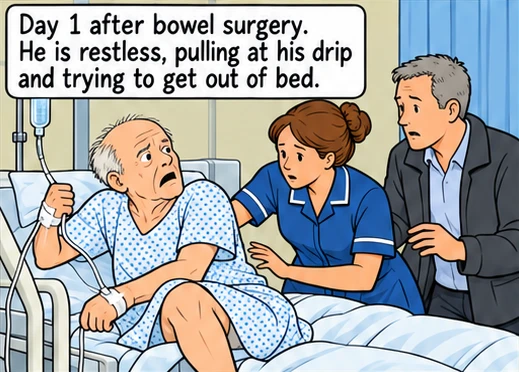
Delirium in 30
The shared foundation: recognise delirium, seek help and provide care that supports the person.
Open moduleThen choose further topics for your role and setting
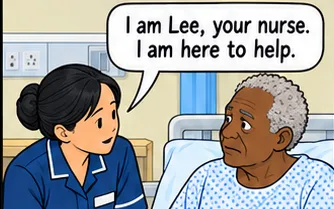
Safety, distress and agitation
Patient and staff safety, therapeutic engagement, de-escalation and careful use of medicines. Complete Delirium in 30 first.
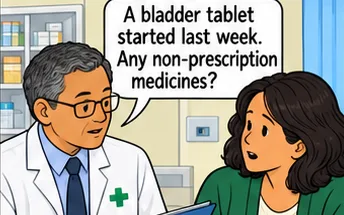
Identifying triggers of delirium
Assess possible causes and contributors, and plan treatment and review.
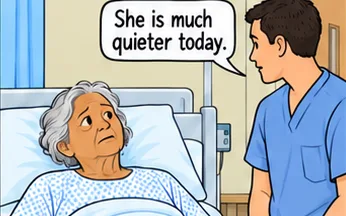
Distress in delirium
Recognise and assess distress, including distress in someone who is drowsy or withdrawn.
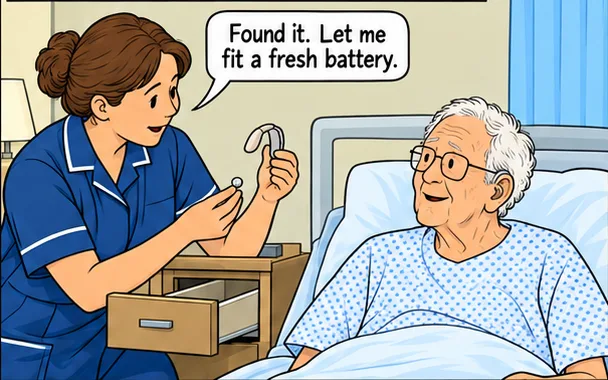
Communication in delirium care
Useful language for patients, families and clinical handover, with 100 examples and editable resources.

Persistent delirium
Reassessment, recovery and support for people with persistent delirium and their families.
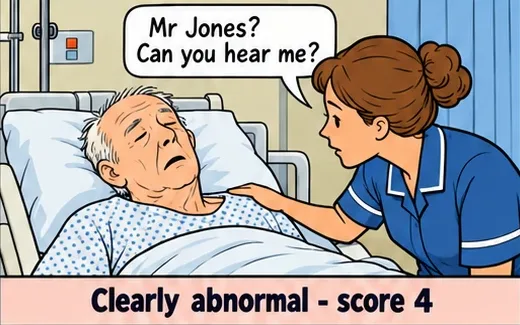
4AT scoring: 12 illustrated cases
Follow the assessment in each case, read the scoring explanations, then try the self-test.
From case 1: assessment after a hip fracture.
Open the 4AT course →Before you start: Each course explains whether it saves your place in the current browser tab. Save or print your completion certificate before leaving. No learner account is needed.
How the modules work
Work through the material, then try the questions. You can review the explanations and try again.
- Step 1
Read the module
The teaching includes clinical examples, references and selected videos.
- Step 2
Answer the questions
Each module has ten questions with explanations.
- Step 3
Save a completion certificate
Meet the assessment requirements shown in the course, read the feedback for every answer and confirm completion. Add your name, then print or save your certificate.
Illustrated Delirium Stories
Discuss a case
Use the illustrated cases alongside the courses for individual learning, supervision or a team discussion.
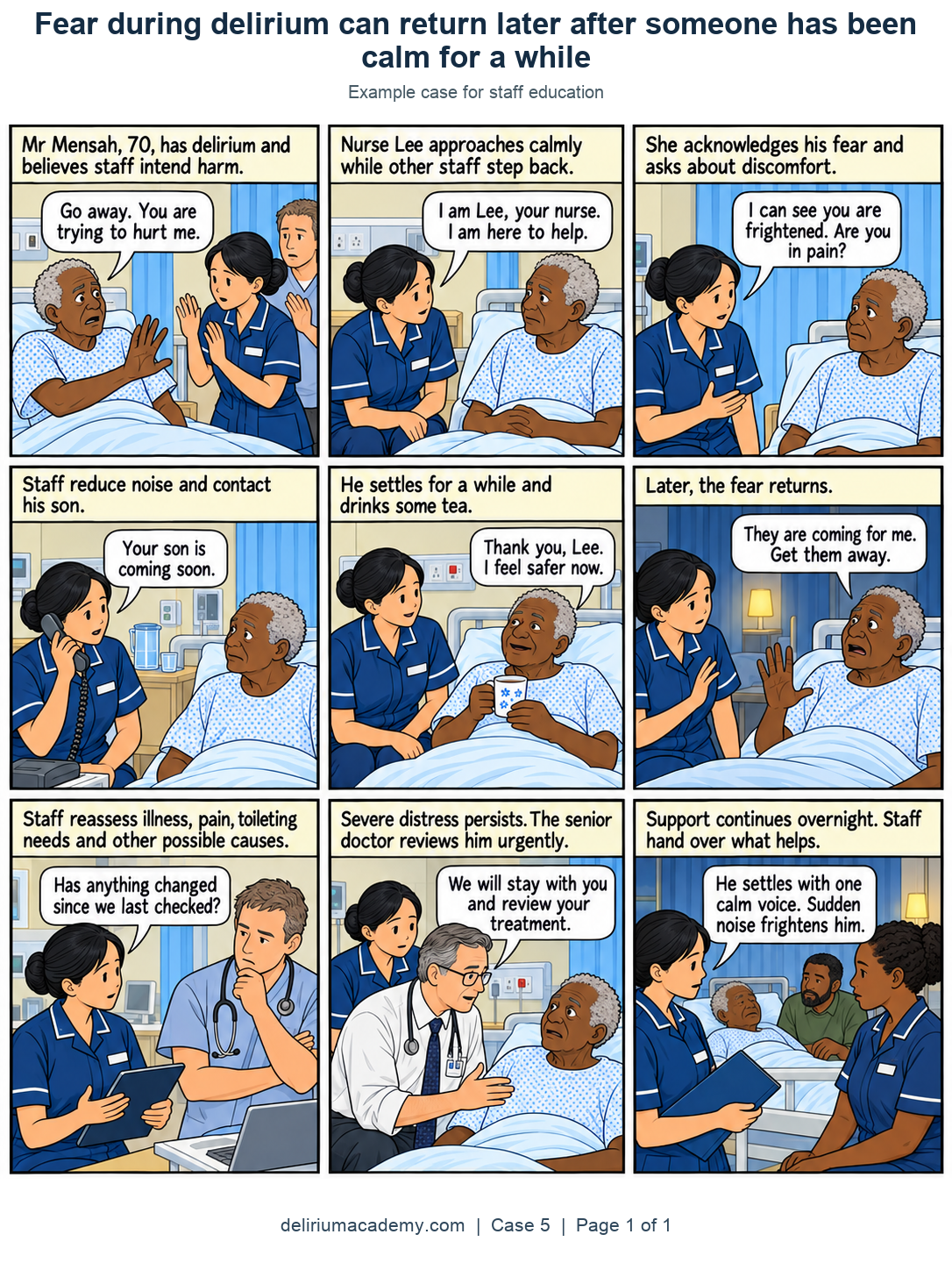 Case 5Frightened by the ward
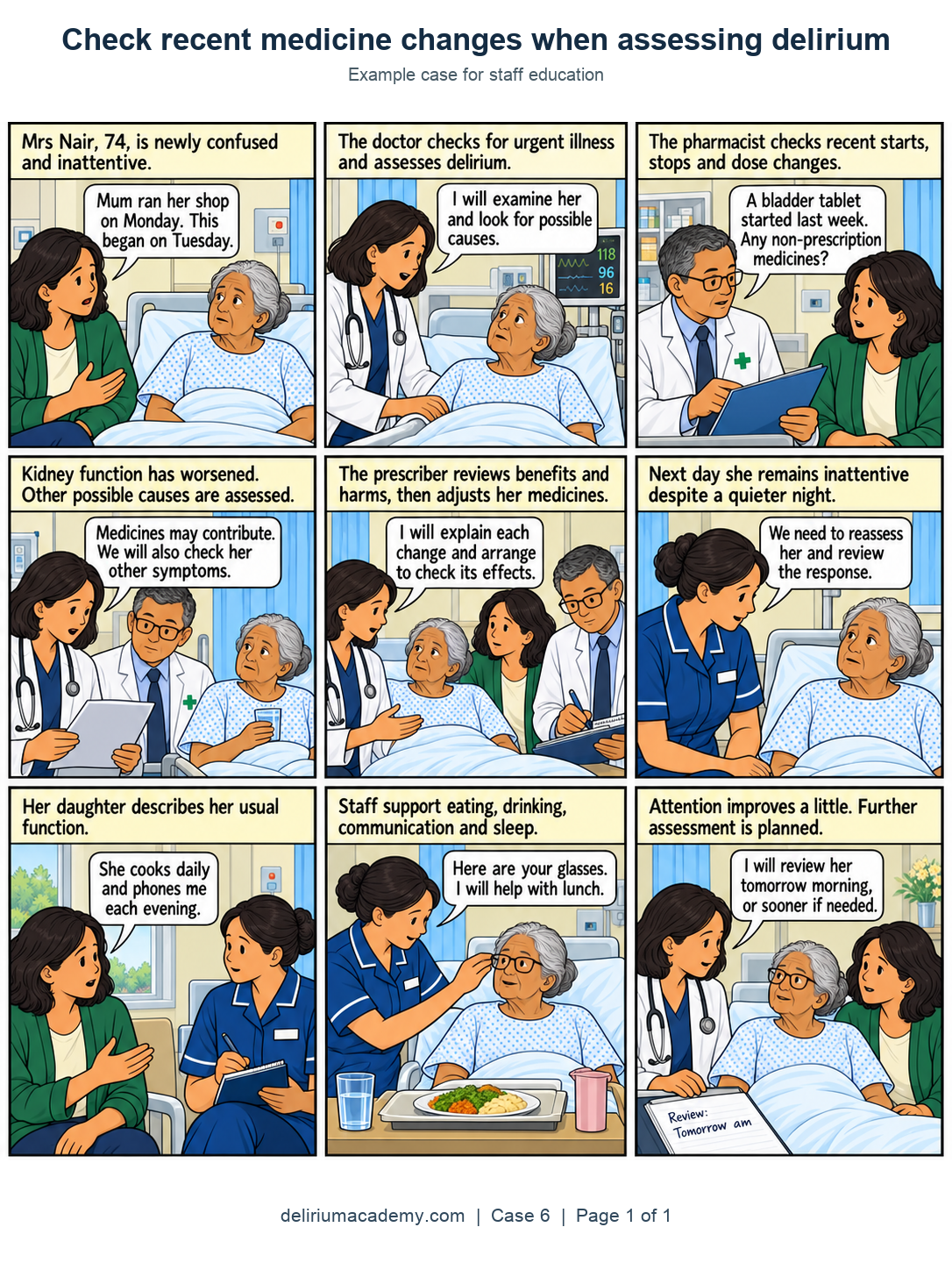 Case 6Check what changed in the medicines
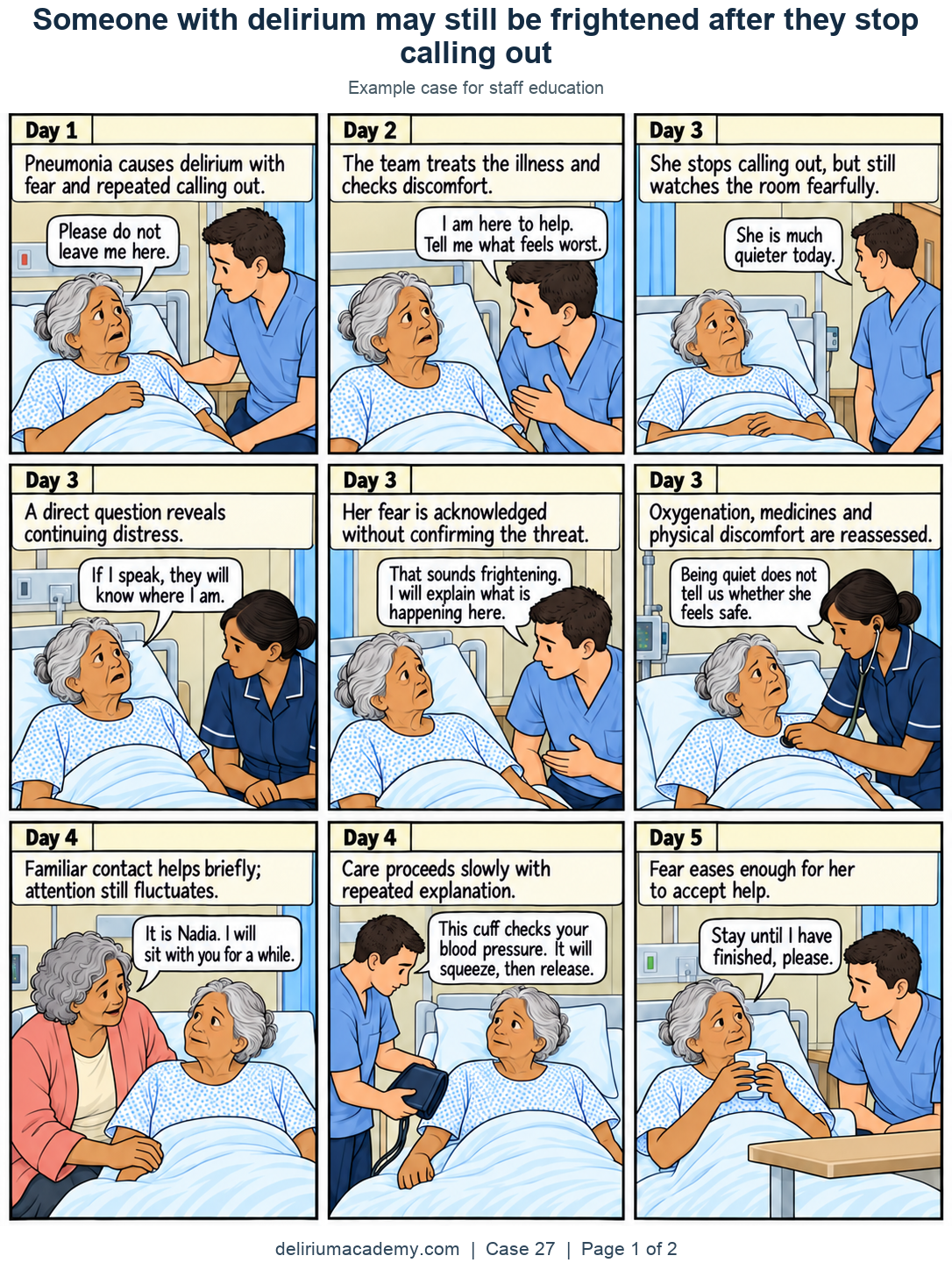 Case 27She has stopped calling out
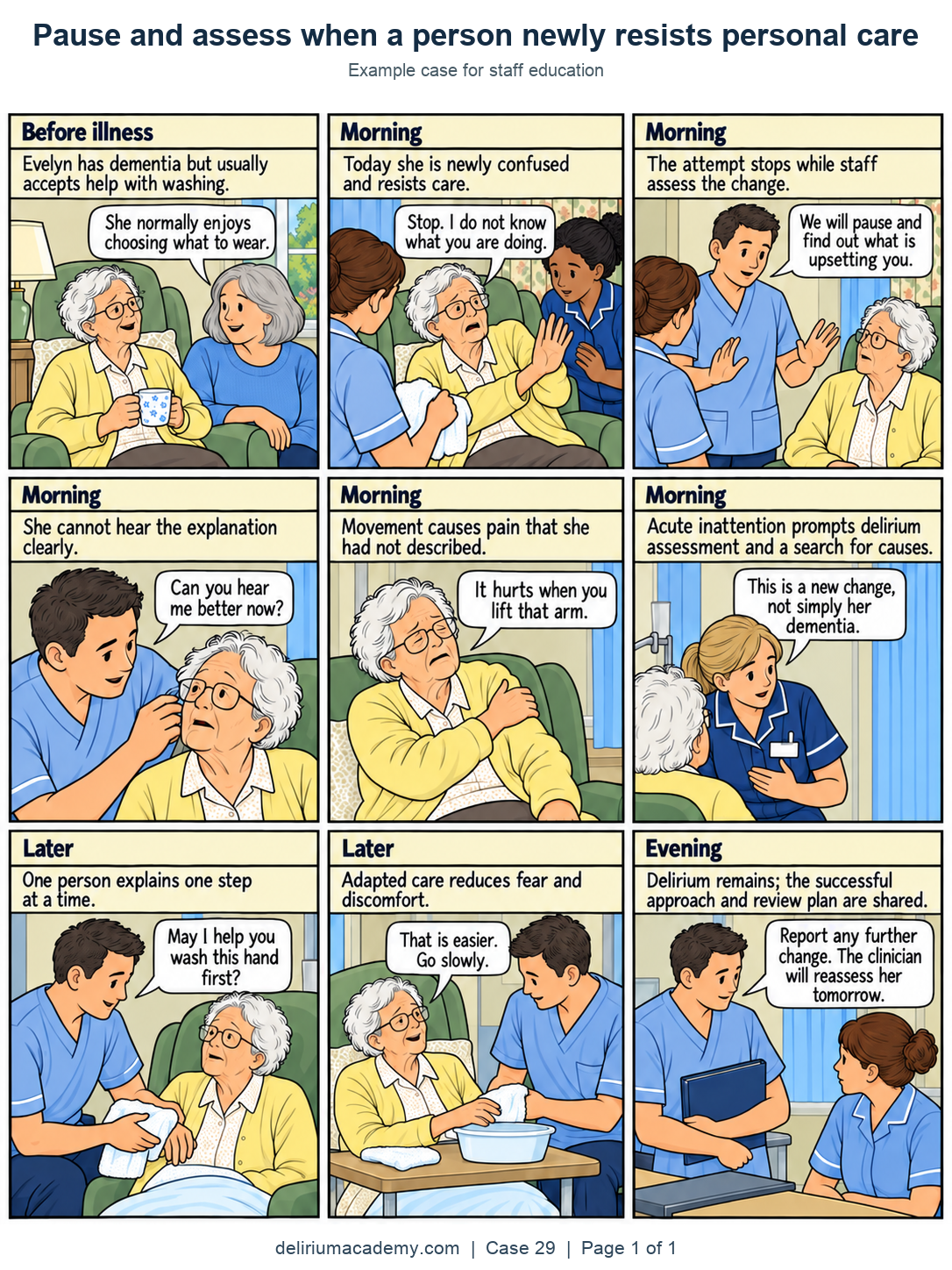 Case 29Before the next attempt
Teach your team
Editable slides, twenty example cases, a concise curriculum and session plans aligned with the courses.
 Case booklet
 Curriculum
 Practice card
 Educator guide
Link to the Academy from your website
Suggested wording:
Delirium Academy: free delirium education for healthcare professionals, care staff and students caring for adults. Start with Delirium in 30. deliriumacademy.com
Original Academy text is available under CC BY 4.0. Credit the Academy, link to the source and identify changes.
A course for families

Families are often trying to understand delirium while someone they know is acutely unwell. This free 30-minute course explains what delirium is, what care involves, how relatives and friends can help, and what recovery may look like. It includes short films, questions with explanations, and a summary to keep.
Professionals and educators can review it themselves, then share it after explaining delirium or when a family asks what to expect. No sign-up is needed.
View and share the family course →On deliriumsupport.com, the family site.
About this website
Created and clinically led by Professor Alasdair M J MacLullich, Professor of Geriatric Medicine at the University of Edinburgh and Consultant Physician at the Royal Infirmary of Edinburgh.
About the website and clinical review →